
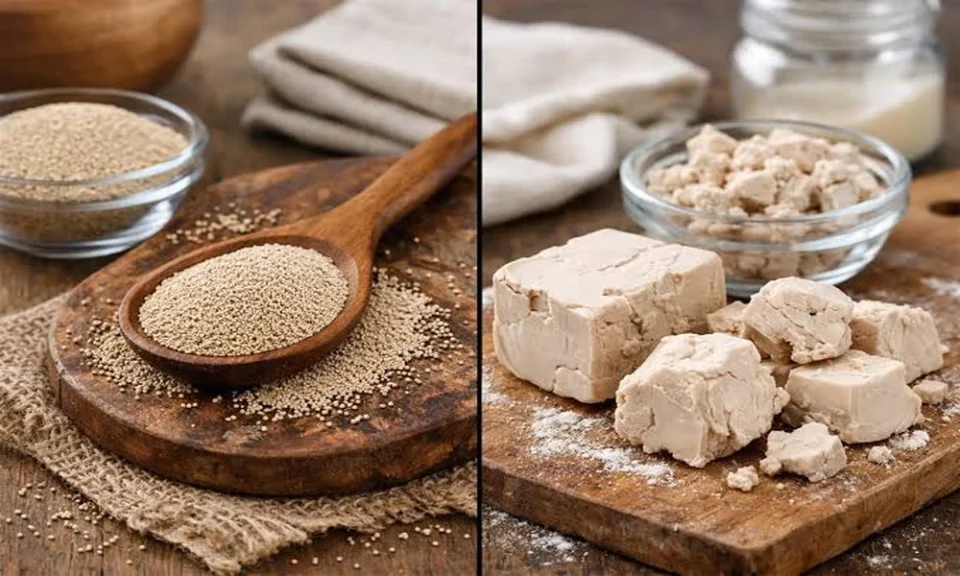
Moisture is one of the most important variables in food manufacturing. Fresh vegetables, starches, proteins, fruit ingredients, seasonings, fermentation products, and food powders may all contain enough water to make storage, transportation, or further processing difficult. Industrial drying converts these wet ingredients into more stable products by removing moisture under controlled temperature and airflow conditions.
The objective is not simply to make a material dry. A successful drying process must reach the required final moisture while protecting color, flavor, nutrients, texture, particle structure, and processing performance.
Why Food Ingredients Need to Be Dried
Water supports microbial activity and many chemical reactions that reduce shelf life. High-moisture materials may spoil quickly, become difficult to package, or experience changes in texture during storage.
Industrial drying reduces the amount of available moisture and can make ingredients easier to handle and transport. Depending on the product, drying may also prepare the material for grinding, blending, granulation, extraction, or final packaging.
Common reasons for drying food ingredients include:
- Extending product shelf life
- Reducing transportation and storage weight
- Improving powder flowability
- Preventing microbial growth
- Preparing materials for milling or mixing
- Achieving a specific final moisture specification
- Improving stability during long-term storage
However, removing too much moisture can be just as problematic as removing too little. Excessive drying may increase energy consumption while damaging heat-sensitive ingredients.
Drying Begins With the Wet Ingredient
The behavior of the raw material should determine the drying method.
Two ingredients with the same initial moisture content may require completely different equipment. A free-flowing granular material behaves differently from a sticky paste, while a thin vegetable slice has very different heat-transfer characteristics from wet protein powder.
| Material Factor | Why It Matters |
| Initial moisture | Determines the amount of water that must be removed |
| Target moisture | Defines the drying endpoint |
| Heat sensitivity | Limits allowable product temperature |
| Particle size | Influences heat and mass transfer |
| Stickiness | Affects material movement and equipment fouling |
| Bulk density | Influences equipment loading |
| Product form | Helps determine whether tray, contact, fluidized, or other drying is appropriate |
This is why equipment selection based only on kilograms per hour can be misleading. The actual drying challenge is defined by the relationship between the material and moisture during the entire process.
Heat Transfer and Moisture Removal
Industrial drying generally involves two processes happening at the same time: heat is transferred into the product, and moisture moves from inside the material to its surface before evaporating.
At the beginning of drying, surface moisture may be relatively easy to remove. As the product becomes drier, internal moisture must migrate through the material structure. This later stage can become considerably slower.
Increasing temperature may accelerate evaporation, but it is not always the best solution. Excessive heat can cause browning, aroma loss, protein denaturation, surface hardening, or nutrient degradation.
For heat-sensitive foods, controlling product temperature is usually more important than simply maximizing the temperature of the heating medium.
Different Dryers Solve Different Problems
No single dryer is ideal for every food ingredient.
A drying oven, for example, is commonly used when products can be arranged on trays or racks and exposed to controlled heated air. It can be suitable for herbs, vegetables, fruits, powders, granules, and other products processed in relatively simple batches.
Drying ovens offer several practical advantages:
- Straightforward operation
- Flexible batch production
- Easy product changeover
- Controlled temperature
- Suitability for many small and medium production runs
Their main limitation is that heat must normally travel from the surrounding hot air into the product. Thick layers or densely loaded trays can therefore create uneven drying if airflow is poorly distributed.
For wet cakes, pastes, powders, and sticky materials, indirect contact drying may be more suitable. A paddle dryer uses heated surfaces inside the equipment to transfer energy directly to the material while rotating paddles continuously mix and move the product.
When discussing a difficult wet material with a paddle dryer manufacturer, processors should therefore provide more than production capacity. Information about moisture content, viscosity, stickiness, temperature limitations, particle behavior, and required final moisture is often necessary for reliable equipment sizing.
Controlling Final Product Quality
The most effective drying process is one that consistently reaches the required product specification.
Important operating variables include:
- Drying temperature
- Residence time
- Air velocity or heating-medium temperature
- Feed rate
- Bed or material layer thickness
- Exhaust humidity
- Final product temperature
These variables interact with one another. Increasing feed rate, for example, may reduce residence time and produce higher final moisture. Increasing temperature may compensate, but it may also damage sensitive ingredients.
Good process control therefore focuses on balancing moisture removal and product quality rather than maximizing one operating parameter.
Energy Efficiency Also Matters
Drying is often one of the more energy-intensive operations in food processing because evaporating water requires significant thermal energy.
Efficiency can be improved by reducing unnecessary moisture before thermal drying, maintaining clean heat-transfer surfaces, controlling exhaust conditions, avoiding excessive final drying, and recovering waste heat where practical.
Mechanical dewatering, filtration, centrifugation, or pressing can also reduce the load on the dryer before heating begins. Removing water mechanically is often less expensive than evaporating the same amount thermally.
From Moisture Removal to Product Stability
Industrial food drying should ultimately be viewed as a product-stabilization process rather than simply a heating operation.
The correct dryer depends on how the ingredient behaves as moisture leaves it. A material may begin as a slurry, pass through a sticky intermediate phase, and finally become a free-flowing powder. Understanding these changes helps manufacturers select appropriate drying technology and operating conditions.
Whether the application uses a drying oven, contact dryer, fluid bed system, or another technology, the same principle applies: control moisture removal without sacrificing the characteristics that make the final ingredient valuable.
A stable product is therefore the result of balancing heat transfer, moisture movement, residence time, equipment design, and material behavior throughout the drying process.
